Jun 13, 2026
How Segment Size Affects Concrete Grinding Performance
When contractors think about diamond tooling performance, they often focus on bond hardness and diamond grit selection. While both are critical, another factor that can dramatically influence grinding speed, floor flatness, and overall tooling performance is surface area and segment size.
Understanding how much diamond is in contact with the floor can help you select the right tooling configuration for the job, improve productivity, and achieve more consistent grinding results.
What Is Surface Area in Diamond Tooling?
Surface area refers to the total amount of diamond segment material making contact with the concrete beneath the grinding machine.
Every grinding machine applies a fixed amount of weight and downward pressure to the floor. How that pressure is distributed across the diamond segments directly affects how aggressively the tool cuts.
The same machine can behave very differently depending on how many segments are installed and how much contact area those segments create.
How Pressure Affects Cutting Performance
To understand surface area, it's helpful to think about the relationship between machine weight and segment pressure.
Imagine a grinding machine weighing 240kg.
If the machine is fitted with 12 segments, each segment is effectively applying approximately 20kg of pressure to the concrete.
If the same machine is fitted with 24 segments, the pressure is spread across twice as many contact points, meaning each segment applies approximately 10kg of pressure.
Because each segment receives less force, it penetrates the concrete less aggressively and removes material more slowly.
The result is a shallower, more controlled cut.
This principle explains why segment configuration can significantly influence grinding performance even when using the same grit size and bond hardness.
The Golden Rule of Surface Area
A simple rule applies when selecting segment configurations:
More Surface Area = Flatter Cut
Less Surface Area = More Aggressive Cut
The greater the amount of diamond touching the floor, the more the machine's weight is distributed across the tooling.
Conversely, reducing the amount of contact area concentrates the machine's weight into fewer segments, increasing pressure and cutting depth.
Why Fewer Segments Cut More Aggressively
When fewer segments are installed beneath a grinder:
- More pressure is applied to each segment.
- Segments penetrate deeper into the concrete.
- Material removal rates increase.
- Grinding becomes more aggressive.
- Aggregate exposure is achieved faster.
- Floor corrections can be completed more quickly.
This is why contractors often use reduced tooling configurations when aggressive cutting is required.
Common Examples
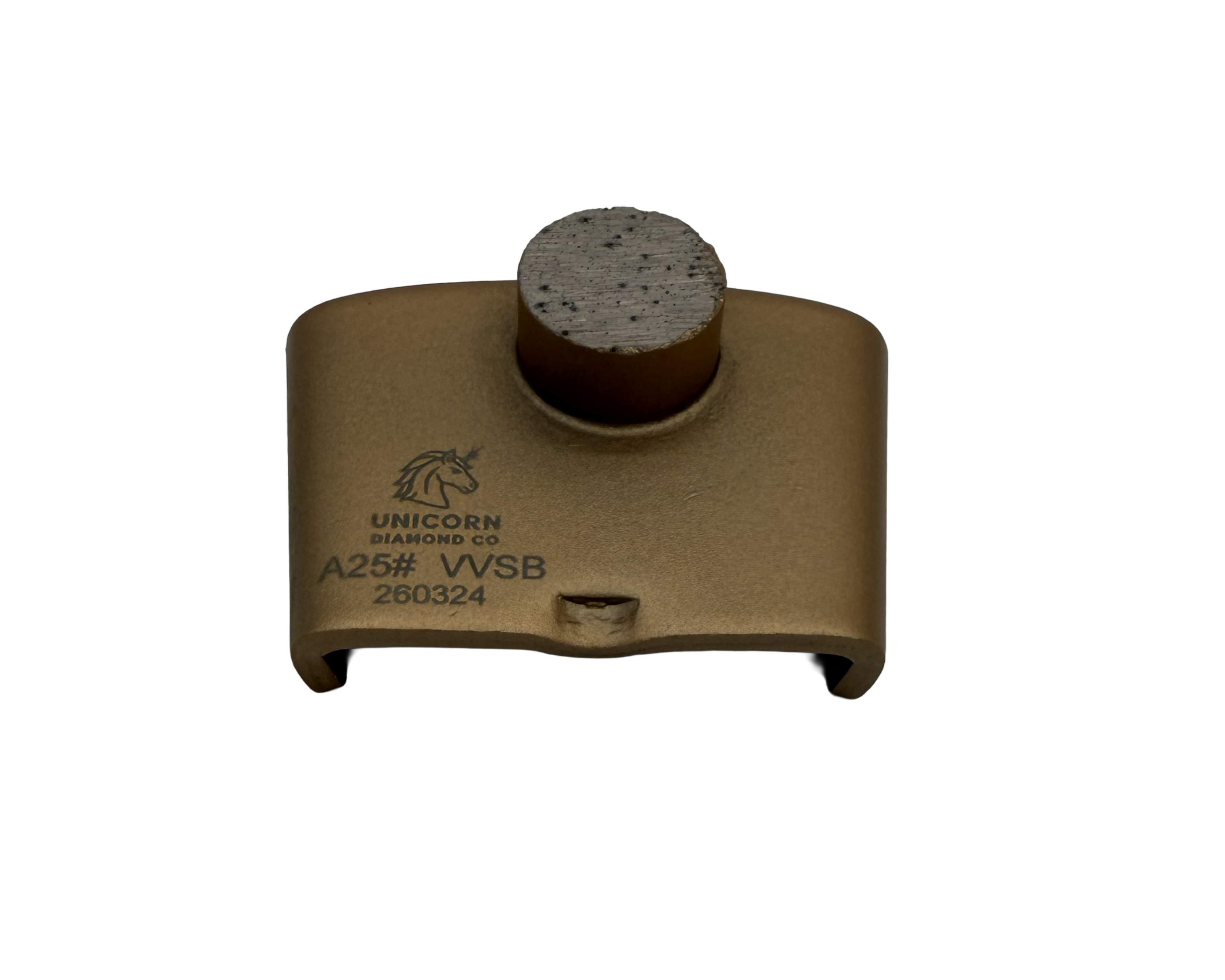
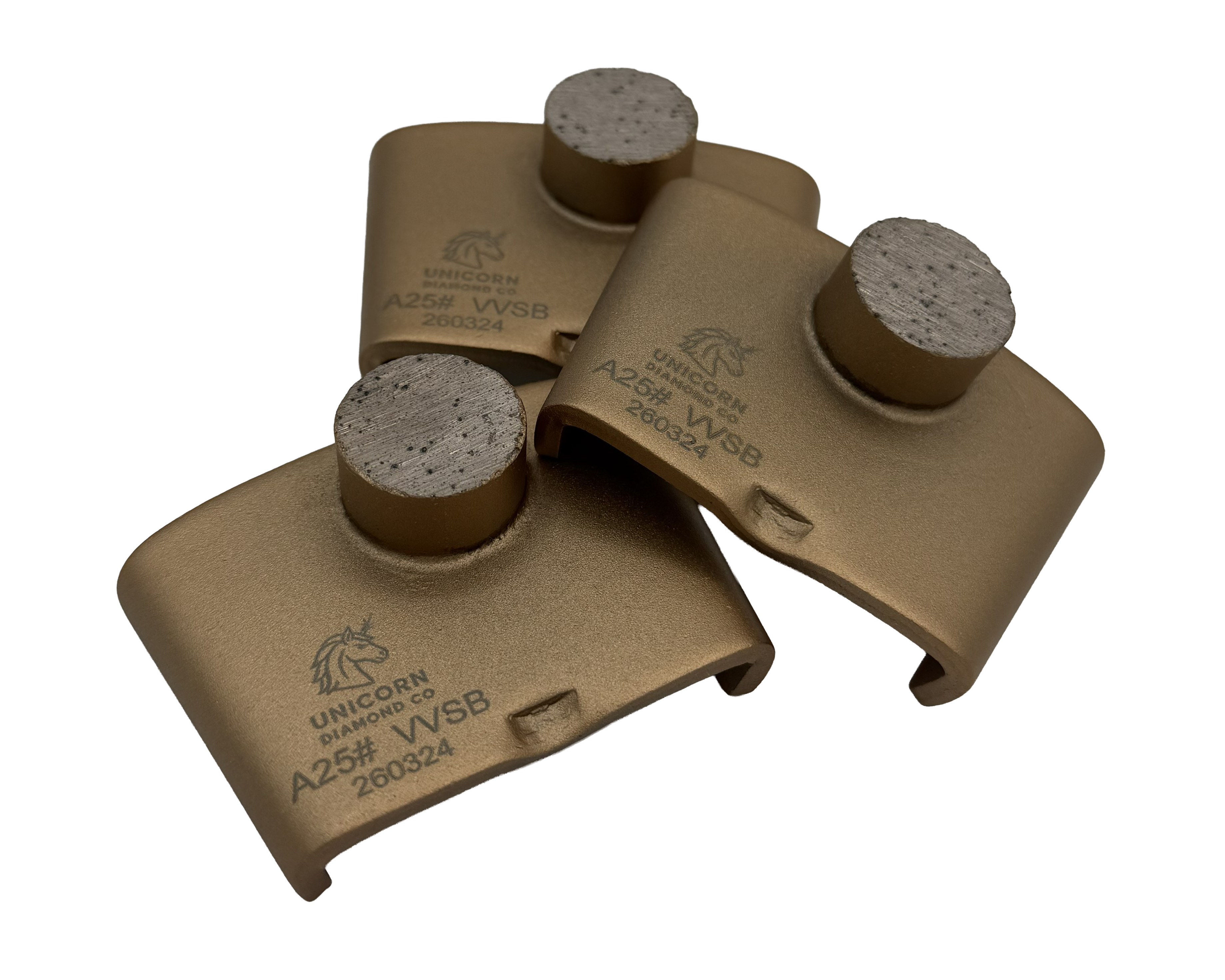
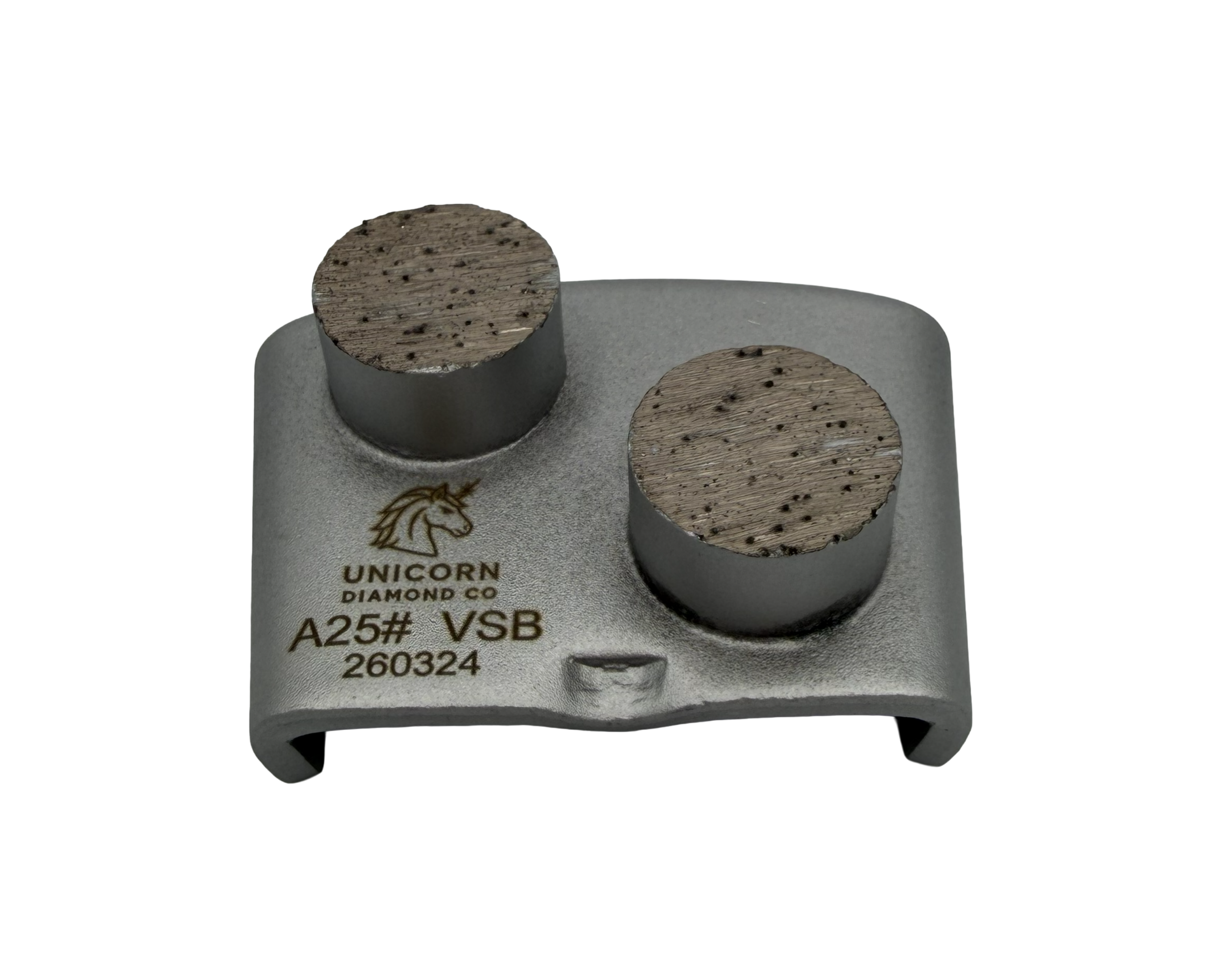
Single Segment Diamonds
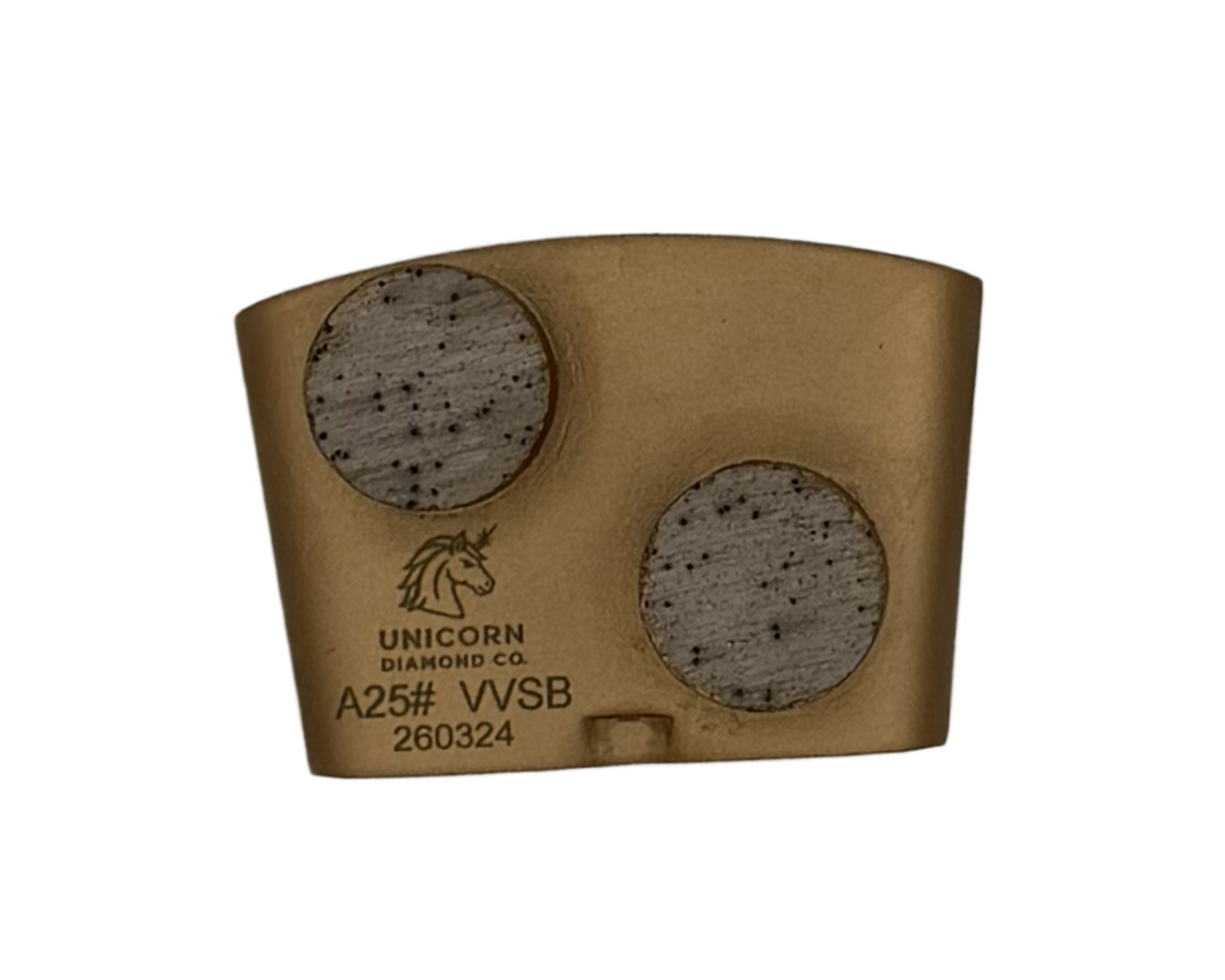
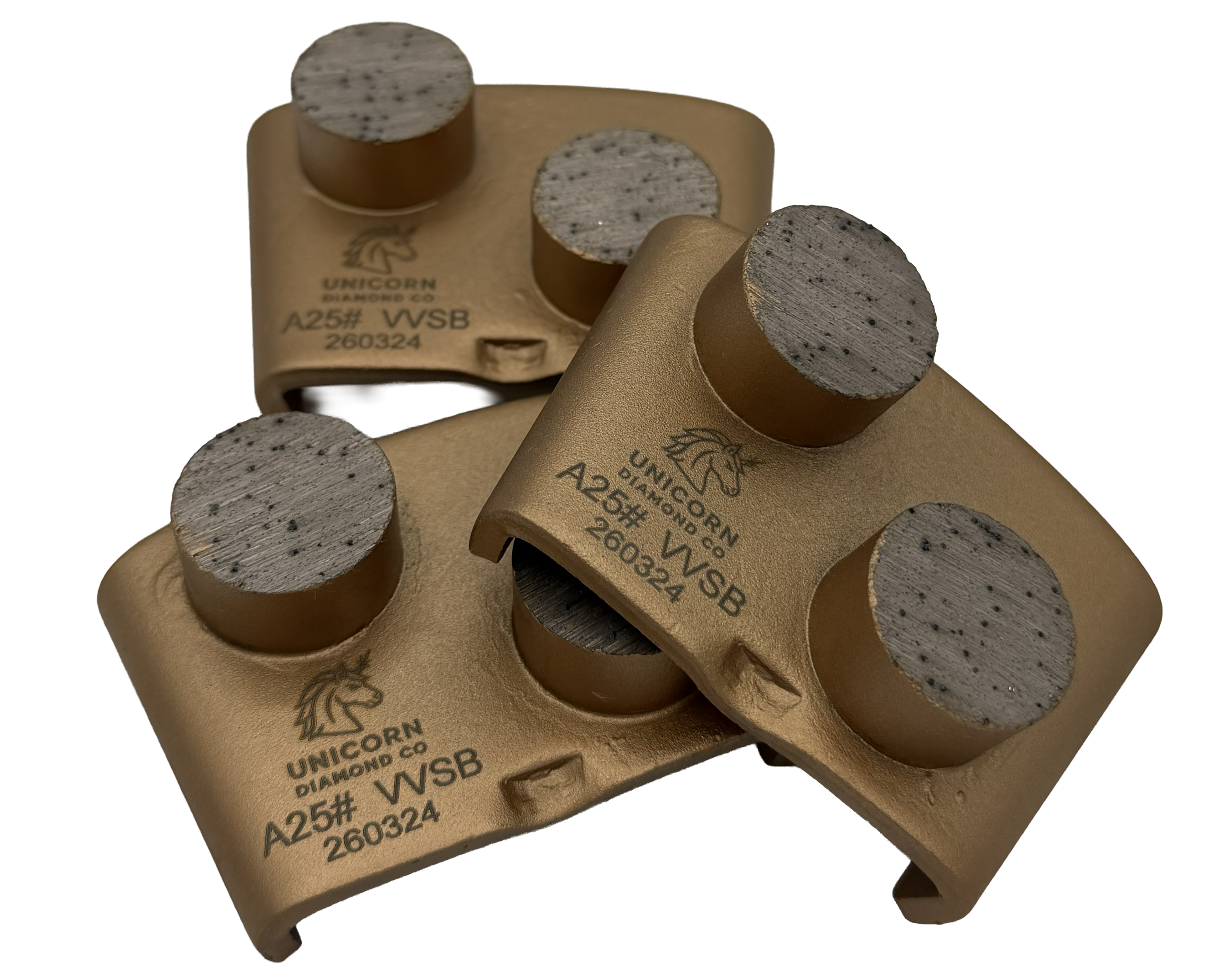
Single-segment tools have less contact area than double-segment tools.
Because the machine's weight is concentrated onto a smaller surface area, they:
- Cut faster.
- Remove coatings more aggressively.
- Expose aggregate more quickly.
- Perform well during heavy stock removal.
However, the increased aggressiveness can also make them more difficult to control on uneven floors.
Half Set Tooling
A half-set configuration uses only half the available tooling positions beneath the machine.
For example:
- A machine designed for 24 diamonds may only be fitted with 12.
- The machine weight is distributed across fewer segments.
- Each segment receives significantly more pressure.
Benefits include:
- Faster grinding.
- Increased aggregate exposure.
- More aggressive floor correction.
- Improved coating removal performance.
Why More Segments Produce Flatter Floors
Increasing the number of segments increases total contact area and distributes machine weight more evenly.
This creates a more controlled grinding action that helps maintain floor flatness.
Benefits of Increased Surface Area
- Flatter grinding profile.
- Reduced risk of gouging.
- Better control on uneven slabs.
- More consistent scratch patterns.
- Improved floor refinement.
- Easier transition into polishing stages.
Many contractors switch to fuller tooling configurations once major grinding and correction work has been completed.
Full Set Tooling
A full-set configuration uses all available tooling positions beneath the machine.
Benefits include:
- Maximum stability.
- Consistent grinding.
- Improved floor flatness.
- Reduced cutting depth.
- Better refinement and scratch removal.
Full sets are commonly used during later grinding stages when the goal is refinement rather than aggressive material removal.
Choosing the Right Configuration
The ideal segment setup depends on the objective of the project.
Use Less Surface Area When:
- Exposing aggregate.
- Removing coatings.
- Correcting uneven floors.
- Grinding hard concrete.
- Increasing production rates.
- Performing heavy stock removal.
Use More Surface Area When:
- Refining scratch patterns.
- Maintaining floor flatness.
- Preparing for polishing.
- Working on sensitive decorative surfaces.
- Achieving consistent floor profiles.
Many experienced contractors alternate between aggressive and refinement-focused setups throughout a project.
Surface Area vs Tool Life
Surface area can also affect diamond consumption.
With fewer segments:
- Each segment works harder.
- Cutting speed increases.
- Segment wear may accelerate.
With more segments:
- Wear is distributed across more tooling.
- Individual segment life may increase.
- Grinding becomes more controlled.
The correct balance depends on whether speed, refinement, or tooling longevity is the primary objective.
Common Mistakes When Selecting Segment Configurations
Many grinding challenges can be traced back to using too much or too little surface area for the application.
Common mistakes include:
- Using a full set when aggressive cutting is required.
- Using a half set during scratch refinement stages.
- Attempting to achieve flatness with overly aggressive tooling.
- Failing to adjust segment configuration as the project progresses.
The most productive contractors understand that tooling setup should evolve throughout the grinding and polishing process.
Final Thoughts
Surface area and segment size play a major role in determining how aggressively a diamond tool cuts and how flat a floor remains during grinding.
By understanding how machine weight is distributed across the tooling, contractors can make smarter decisions about segment configurations and optimise their grinding performance.
Remember the key principle:
Less Surface Area = More Aggressive Cutting
More Surface Area = Flatter, More Controlled Grinding
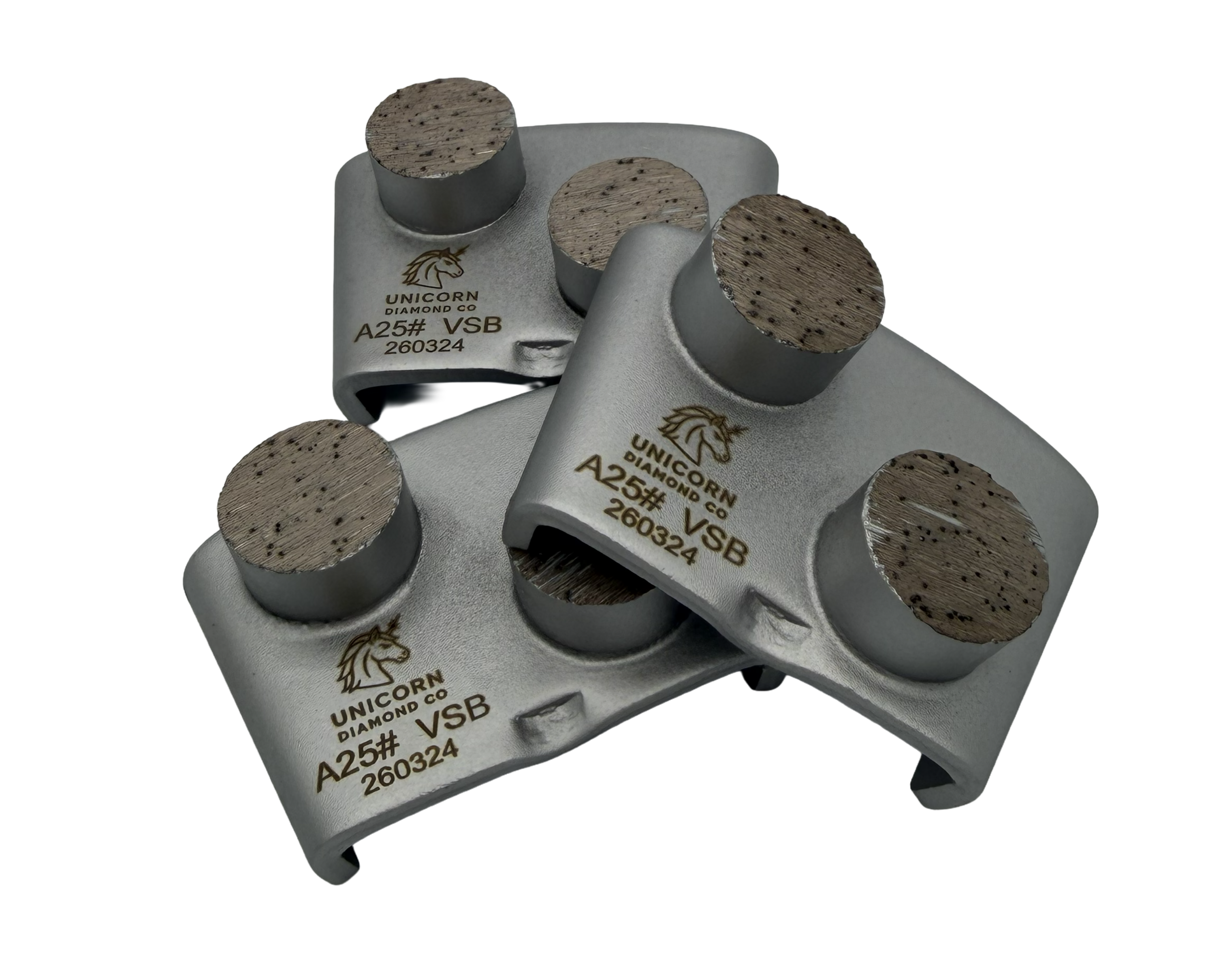
At Unicorn Diamond Co, we offer a wide range of segment configurations designed to suit everything from aggressive aggregate exposure to precision floor refinement. Understanding how surface area affects cutting performance can help you maximise productivity, improve floor quality, and get the most value from your diamond tooling.